A YEAR OF HERBOLOGY EXPLORATION
Class Objectives
Curriculum Highlights
Core
Competencies
Through careful observation, sketching, and hands-on exploration, students build a foundational relationship with the plants and ecosystems around them — the same practice naturalists, botanists, and explorers have used for centuries.
Make meaningful connections between science, history, and everyday life through the study of herbs and the natural world.
- 01.Recognize and talk about common herbs and useful plants using basic plant science vocabulary.
- 02.Notice and describe how roots, stems, leaves, flowers, and seeds help the plant grow and survive.
- 03.Build observation skills through journaling, sketching, labeling, and simple written descriptions.
- 04.Group and compare plants based on their appearance, function, and natural growth environment.
- 05.Learn how herbs fit into ecosystems, including relationships with pollinators and other living things.
- 06.Use the senses — smell, texture, appearance, and guided taste — to make careful observations.
- 07.Participate in collaborative investigations by asking questions, sharing discoveries, and creating something new together.
- 08.Learn how herbs have been used for food, crafts, and practical purposes across cultures and time.
- 09.Practice asking questions, listening intently, and conducting simple guided research.
- 10.Describe observations, discoveries, and ideas clearly through conversation, writing, and field journal entries.
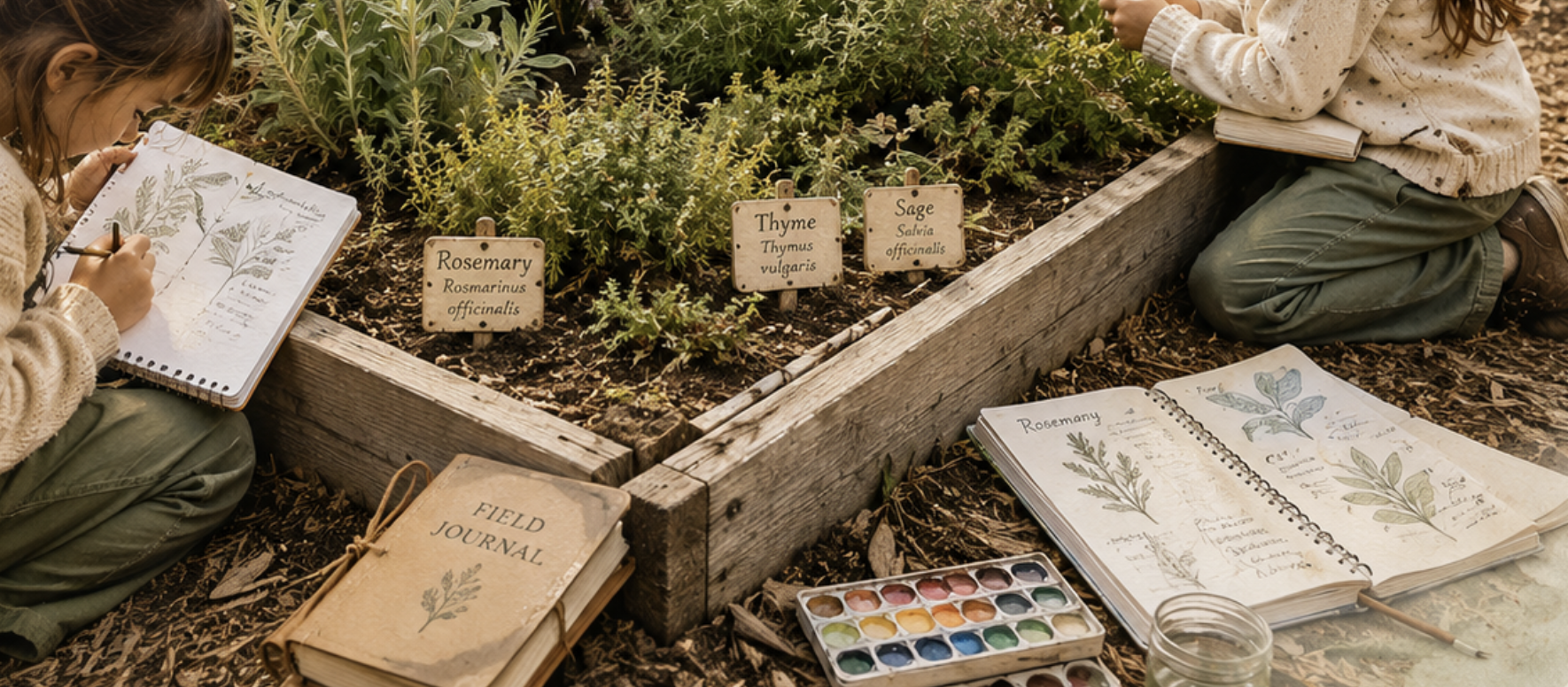
Over the school year, each student assembles their own Herbology portfolio — a growing collection of observations that represents everything we get excited about together. While portfolios are personal, we share in the research and discovery through scavenger hunts, fact-finding, and presenting what we learn.